
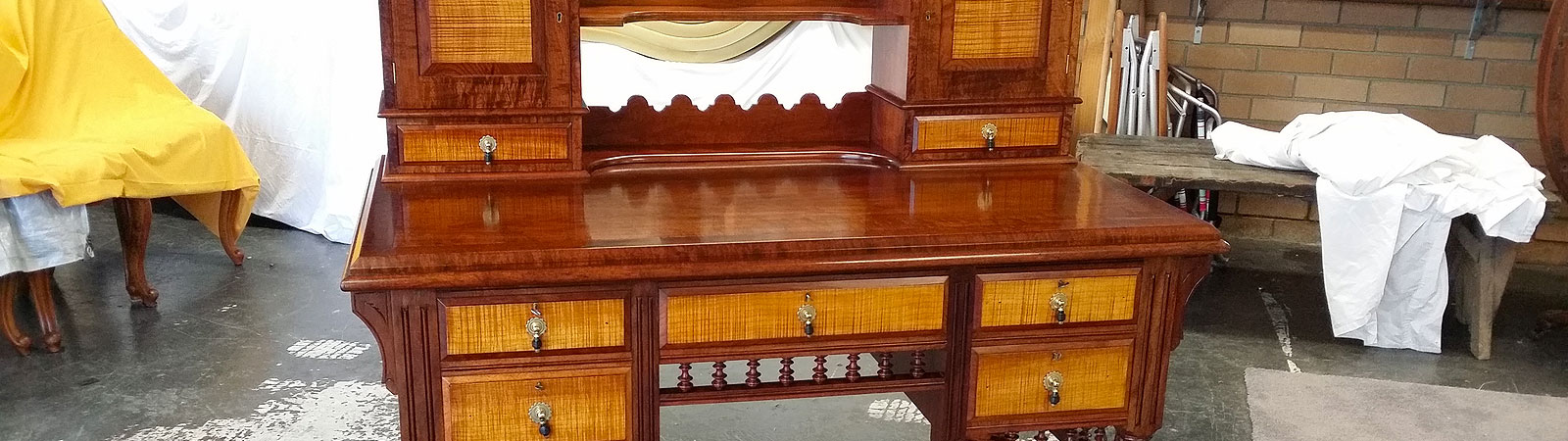
Why Matching Timber Colour Is Harder Than Timber Grain?
 02Sep, 2026
A replacement timber can closely replicate the original grain yet still stand out because its colour develops differently over time. During furniture restorations in Kingston, sun exposure, oxidation, ageing and previous finishes all influence the final tone. Therefore, colour assessment demands more precision than simply selecting timber with a similar grain pattern.
Grain Can Be Matched Structurally
Timber grain refers to the arrangement and direction of wood fibres. When repairing a damaged section, a specialised restorer will often choose replacement timber with a comparable grain orientation and growth-ring pattern. Cutting the insert in the same orientation as the original can make the repair seem continuous.
Colour doesn’t always behave predictably. Even boards from the same species can differ in looks. Australian blackwood, for example, ranges from golden tan through reddish and purple tones to darker brown shades. Colour can also vary within a single log.
Why Does Timber Colour Change?
Ultraviolet exposure and oxidation gradually alter the chemistry of wood. On the other hand, old oils, waxes, shellac, lacquer and other coatings can add further colour during furniture restoration.
Sanding also creates a problem. Removing an old finish often reveals timber that has been protected from light and therefore looks noticeably lighter than the surrounding exposed surface. Once a new finish is applied, the colour can shift again because finishes change how light enters and reflects from the timber.
A 2025 article by Caroll Russell emphasised in the Australian Wood Review that species, log characteristics, cutting method, and density all influence how timber responds to a finish.
How Finishes Impact?
A stain doesn’t only add a fixed colour. Its final appearance depends on the timber’s porosity, existing surface and the type of finish applied afterwards.
Two samples having the same colourant can therefore give different results on different timbers. Oil, shellac and lacquer can also alter depth and sheen. So much so that even different finishing methods can produce different results on the same jarrah. This is why specialists test colourants and finishes on concealed areas before performing furniture restorations in Kingston.
Colour Matching Needs Layered Adjustment
Professional colour matching is done gradually. Diluted dyes, pigments or toners can be established in controlled layers. This allows the restorer to adjust hue, saturation and value without obscuring the timber underneath.
This is mostly important on light woods, where excessive pigment blocks light penetration and makes the fixed section look flat compared with the surrounding timber. Fine applications allow more of the natural grain and three-dimensional character to stay visible.
The assessment should also be made under suitable natural light and from different viewing angles. This is because a repair that looks correct under workshop lighting may appear different under other lighting.
Ultimately, grain matching is largely a matter of selecting and positioning suitable timber. Colour matching needs understanding how wood, previous finishes, light, surface preparation and new coats interact. That’s why successful furniture restoration in Kingston depends on controlled testing and judgement rather than just choosing the closest-looking stain.
We at Adam’s Furniture are the perfect choice for those who want to give their decor a fresh look. We have been providing the highest-quality professional furniture refinishing and upholstery for 34 years. Our professionals give new life to your chosen piece by removing worn-out existing fabric and replacing it with high-quality fabrics that suit your personality. Choose us and see the difference we make. Stay tuned to our blog page for more.
Popular Blogs
-

Common Leather Couch Problems That Can B...
01 Oct, 2026 -

Why Furniture Repair Differs for Tasmani...
05 Aug, 2026 -

Is It Expensive To Reupholster Furniture...
06 Jul, 2026 -

How Professional Dining Chair Recover Re...
12 Jun, 2026 -

Types of Dining Chairs You Can Recover
30 Apr, 2026 -

How To Understand If An Antique Furnitur...
20 Mar, 2026
Post a Comment